
Quick Answer
Limonene is a citrus-scented terpene found in cannabis that is widely associated with uplifting, mood-elevating effects. It works alongside cannabinoids like THC and CBD through a phenomenon researchers call the entourage effect, potentially amplifying or shaping the overall experience[1]. Strains high in limonene tend to feel energizing and bright rather than sedating.
Key Takeaways
- Limonene terpene cannabis effects are most often described as uplifting, mood-elevating, and energizing
- It smells strongly of lemon, orange, and citrus zest and is one of the most recognizable cannabis terpenes
- Limonene may interact with serotonin and dopamine pathways, though robust human clinical research is still developing
- High-limonene strains include Strawnana, Do-Si-Dos, Wedding Cake, Durban Poison, and Super Lemon Haze
- It also appears naturally in citrus fruit rinds, cleaning products, and cosmetics, making it one of the most common terpenes in nature
Introduction
When you crack open a jar of cannabis and get hit with a sharp, lemony burst, there is a good chance limonene is responsible. Understanding limonene terpene cannabis effects is one of the most practical tools available for consumers who want to predict their experience before they buy[2]. This bright, citrusy compound is one of the most recognizable aromatic molecules in the plant kingdom and plays a meaningful role in shaping how certain strains feel.
What Does Limonene Actually Do in Cannabis?
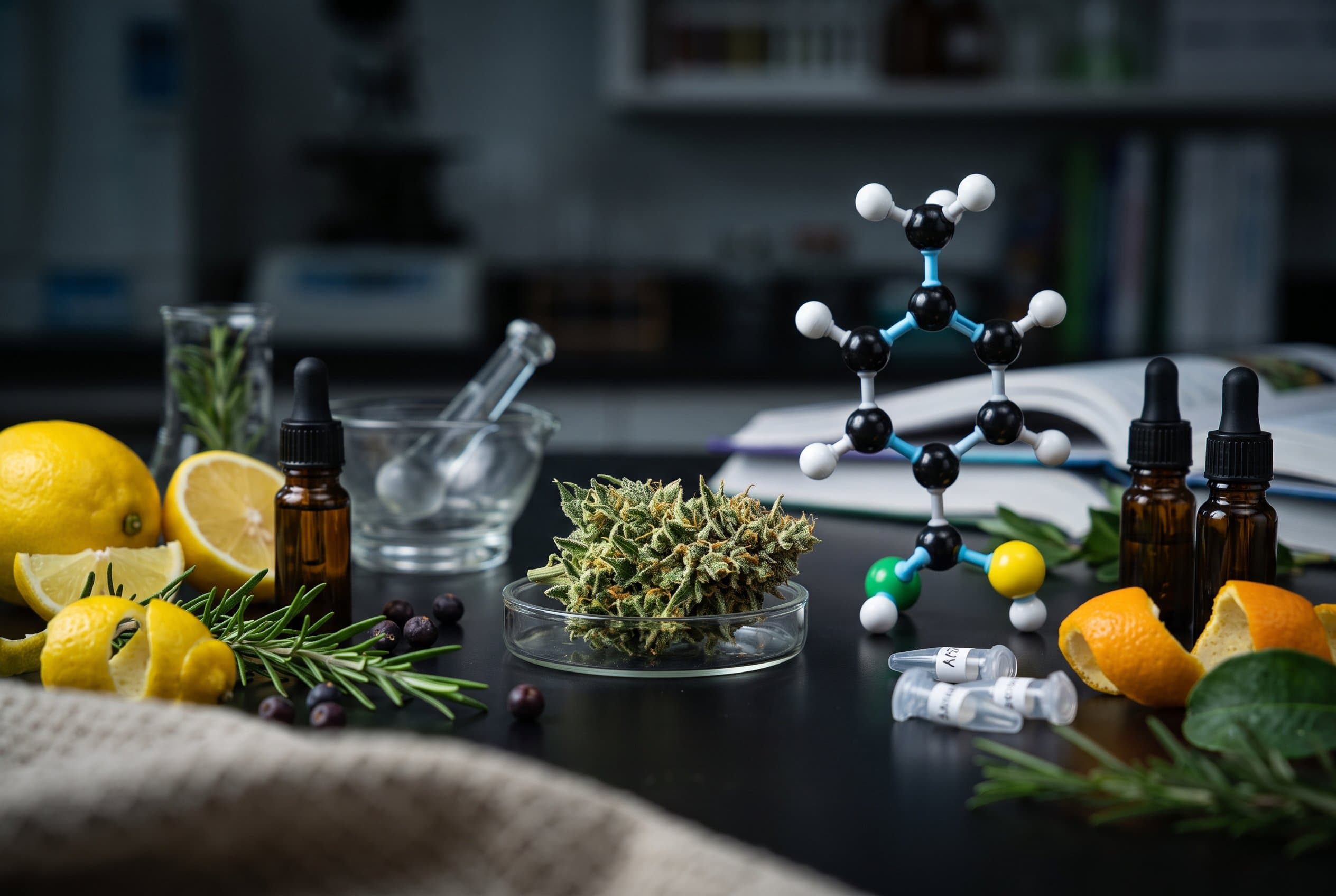
Limonene (chemical name: d-limonene) is a monocyclic monoterpenoid produced in the resin glands of the cannabis plant alongside cannabinoids like THC and CBD[3]. On its own, it carries a sharp citrus aroma that most people find immediately pleasant and stimulating. But its role goes well beyond smell.
Research suggests limonene may interact with serotonin and dopamine receptors in the brain, which could help explain the mood-lifting quality that consumers frequently report with limonene-forward strains[4]. A study published in Frontiers in Neuroscience found that limonene demonstrated anxiolytic properties in preclinical models, though researchers note that large-scale human clinical trials remain limited[4].
Limonene is also considered a contributor to the entourage effect — the widely discussed theory that terpenes and cannabinoids work together synergistically rather than in isolation[1]. In practical terms, a strain with 20% THC and significant limonene may feel noticeably different from a 20% THC strain dominated by myrcene or linalool.
Limonene Terpene Cannabis Effects: What to Expect
Consumers and dispensary data consistently describe limonene-dominant strains as delivering:
- An uplifted, euphoric head effect
- Increased energy and mental clarity
- A lighter, less sedating body feel compared to myrcene-heavy strains
- A generally sociable and creative character
Leafly consumer review data places limonene among the top terpenes associated with "happy," "uplifted," and "euphoric" self-reported effects[2]. It is worth noting that terpene effects are not universal — individual body chemistry, consumption method, and the full cannabinoid and terpene profile of a strain all influence the final experience.
How Much Limonene Is Typically in Cannabis?
Limonene concentrations in cannabis flower generally range from 0.1% to 1.5% by weight, though some cultivars test higher[5]. Even at these relatively small concentrations, terpenes are considered pharmacologically active and capable of influencing the overall effect profile of a strain. Look for limonene at or above 0.5% on a Certificate of Analysis (COA) for a more pronounced effect.
Which Cannabis Strains Are Highest in Limonene?
If you want to seek out limonene in your next purchase, these strains are well-documented for their citrus terpene content[2][5]:
- Durban Poison — A pure sativa landrace from South Africa; bright, energetic, and one of the classic limonene-forward strains; typically 20–24% THC
- Wedding Cake — A cross of Triangle Kush and Animal Mints; often tests with significant limonene alongside caryophyllene; 22–25% THC
- Do-Si-Dos — An indica-leaning hybrid (OGKB x Face Off OG) with a complex terpene profile where limonene adds a citrusy lift; 19–24% THC
- Strawnana — A Banana Kush and Strawberry phenotype cross; beloved for its fruit-forward aroma where limonene shines prominently; 18–22% THC
- Super Lemon Haze — A sativa-dominant cross of Lemon Skunk and Super Silver Haze; limonene is usually the star terpene; 18–22% THC
When shopping, ask your budtender for a COA or look for lab-tested products that list terpene percentages by name[5]. A strain marketed as "citrusy" does not automatically mean it is high in limonene.
How Do Limonene Cannabis Effects Compare to Other Terpenes?
To put limonene in context, here is how it stacks up against the other heavy hitters in the cannabis terpene world[1][3]:
- Myrcene — The most abundant cannabis terpene; earthy and musky; associated with sedation and body relaxation; common in indica-leaning strains
- Caryophyllene — Spicy and peppery; the only terpene known to interact directly with CB2 receptors; often linked to tension relief
- Linalool — Floral and lavender-like; frequently associated with calming, sleep-friendly effects
- Limonene — Citrusy and bright; uplifting and mood-elevating; energizing rather than sedating
If you find that heavy indica strains leave you feeling too couch-locked or groggy, exploring limonene-dominant options could be a worthwhile shift[2]. Conversely, if you are looking for deep relaxation and sleep support, limonene strains may feel too stimulating in the evening.
What Does the Research Say About Limonene?
The science behind limonene is still maturing, but early findings are encouraging. Preclinical studies suggest limonene may reduce anxiety, support stress relief, and interact with neurotransmitter systems in ways that could benefit mood[4]. Some researchers have also explored limonene's potential anti-inflammatory and antioxidant properties, which are studied more extensively in food and pharmaceutical contexts[6].
It is important to distinguish between preclinical animal research and human clinical trials. Much of the current evidence for limonene's mood effects is extrapolated from animal models or in vitro studies, and consumers should treat effect claims as promising but not yet fully proven[4]. That said, consumer self-reporting and real-world dispensary data consistently align with the uplifting profile that early science suggests.
Conclusion
Limonene is one of the most approachable entry points into cannabis terpene science. Its citrus aroma is instantly recognizable, its limonene terpene cannabis effects are well-supported by both consumer data and early research, and the strains that carry it in abundance tend to be crowd-pleasers[2]. Whether you are a curious beginner or a seasoned consumer trying to dial in your experience, paying attention to limonene on a lab report is a smart and practical habit. Next time you visit a dispensary, ask to see terpene data and look for limonene at or above 0.5% for a more pronounced effect[5]. Your nose — and your mood — may thank you.
Sources
- Project CBD - Terpene science, the entourage effect, and cannabinoid-terpene interaction research
2. Leafly - Cannabis strain database and consumer-reported terpene and effects data
3. National Institutes of Health / PubMed - Peer-reviewed research on limonene pharmacology, terpene biosynthesis, and serotonergic activity
4. Journal of Cannabis Research - Peer-reviewed studies on cannabis terpene effects including limonene anxiolytic and mood-related properties
5. SC Labs - Cannabis and hemp laboratory testing data including terpene concentration analysis and COA guidance
6. NORML - Consumer cannabis research summaries, terpene effect reporting, and science-based advocacy resources