

Quick Answer
A cannabis Certificate of Analysis (COA) is a third-party lab report that verifies what's actually in your cannabis product — including cannabinoid percentages, terpene profiles, and safety screening results. It's the most reliable tool consumers have for understanding potency, flavor, and purity before purchasing. Reading a COA takes only a few minutes and can dramatically improve your buying decisions.
Key Takeaways
- A COA is issued by an independent, accredited laboratory — not the brand — making it an objective source of truth
- COAs report Total THC and Total CBD as percentages, along with minor cannabinoids like CBG and CBN
- Terpene panels on a COA reveal which aromatic compounds are present, helping predict effects and flavor
- Safety sections flag pesticides, heavy metals, residual solvents, and microbial contaminants
- Always look for a COA with a recent test date — ideally within the last 12 months for flower and 18 months for concentrates
Introduction
Walking into a dispensary — or browsing an online menu — can feel overwhelming when every product claims to be premium, potent, or lab-tested. But what does "lab-tested" actually mean? That's where the Certificate of Analysis comes in. A COA is your backstage pass to what's really inside a cannabis product, and learning to read one puts real power in your hands as a consumer. Whether you're a curious beginner or an experienced cannabis enthusiast, understanding COAs helps you shop smarter, stay safer, and find strains that genuinely match what you're looking for.
What Is a Cannabis Certificate of Analysis?
A Certificate of Analysis is a formal document produced by an ISO-accredited, independent testing laboratory after analyzing a cannabis sample[1]. Brands submit samples from their batches, the lab runs a series of tests, and the resulting COA is attached to that product — either printed on packaging as a QR code or accessible through the brand's website.
Because the lab operates independently of the cannabis company, the COA is considered an objective report[2]. In most regulated U.S. markets, third-party COA testing is legally required before a product can be sold[3]. This means any compliant dispensary product should have one available on request.
What a COA Is Not
A COA is not a marketing document, and it's not a government safety seal. It reflects what was true of a specific batch at a specific moment in time. Degradation, improper storage, or reformulation after testing could affect a product — which is why checking the test date matters.
How Do You Read the Cannabinoid Panel on a COA?
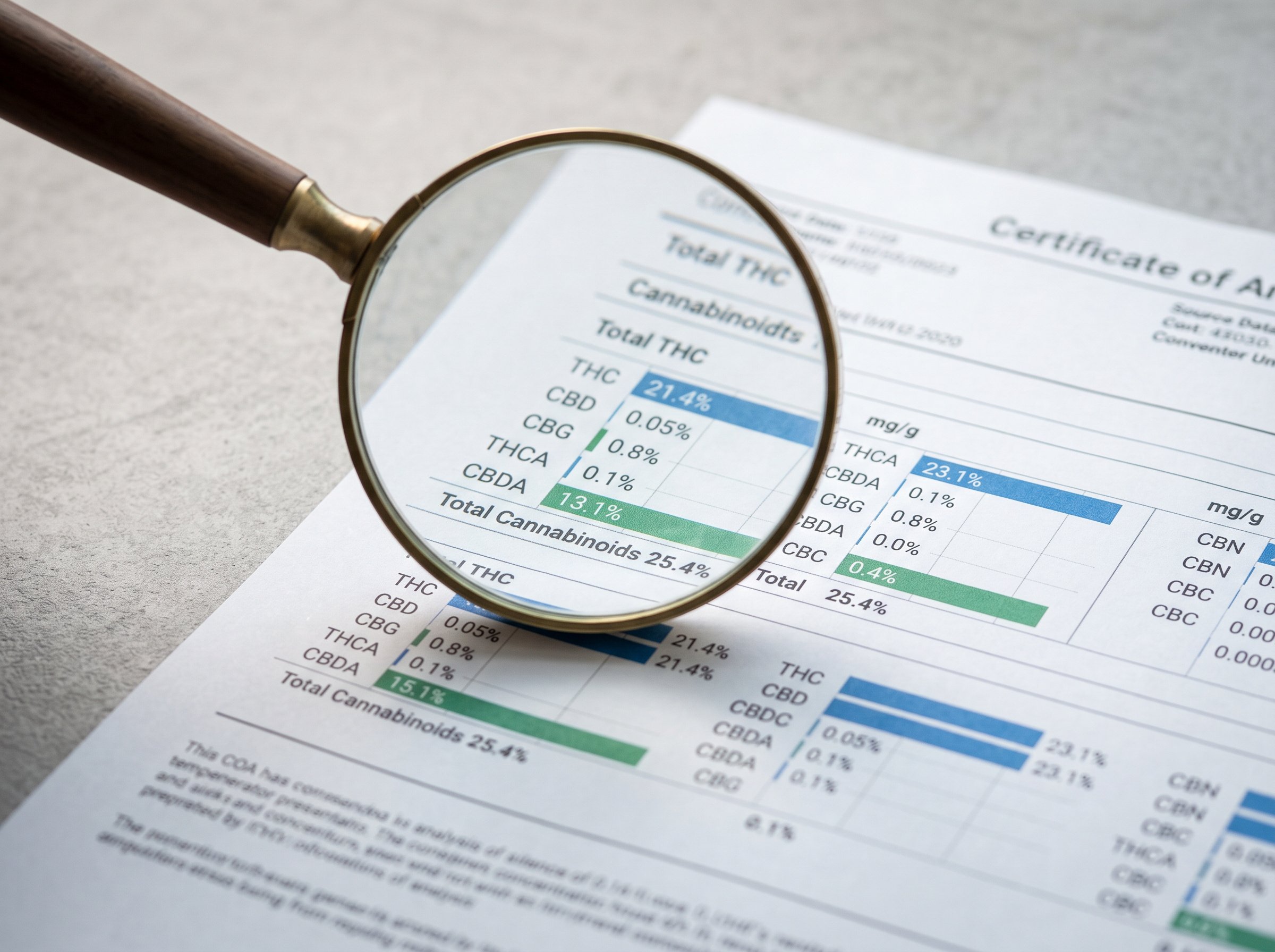
The cannabinoid panel is usually the first section consumers look at, and it's where THC and CBD percentages live[4]. Here's what to know:
- Total THC accounts for both THCA (the raw, non-psychoactive form) and active Delta-9 THC, converted using a standard formula: Total THC = THC + (THCA × 0.877)[1]
- Total CBD is calculated the same way using CBD and CBDA
- Most legal market flower falls between 15–30% Total THC, while CBD-dominant strains typically range from 10–20% CBD with less than 0.3% THC
- Minor cannabinoids like CBG (often 0.5–2%), CBN (usually under 1% in fresh flower), and CBC also appear and contribute to the overall experience
A strain like Sour Diesel, for example, might show 22% Total THC, 0.1% CBD, and 0.8% CBG on its COA — giving you a clear picture of its potency profile before you buy[5].
What Does the Terpene Profile on a COA Tell You?
Not all COAs include terpene data, but those that do offer valuable insight beyond just potency[4]. Terpenes are the aromatic compounds responsible for a strain's scent, flavor, and — according to emerging research — its nuanced effects[6].
Here's what common terpene findings look like in practice:
- Myrcene (>0.5% is considered high): earthy, musky notes; associated with relaxing, sedating qualities; dominant in strains like Granddaddy Purple and OG Kush
- Limonene (typically 0.3–1%): bright citrus aroma; often linked to uplifting, mood-elevating effects; prominent in Lemon Haze and Wedding Cake
- Caryophyllene (0.2–0.8% range): spicy, peppery; the only terpene known to interact directly with CB2 receptors[6]; common in GSC (Girl Scout Cookies) and Gelato
- Linalool (usually under 0.5%): floral, lavender-like; associated with calming qualities; found in strains like LA Confidential
- Pinene (alpha and beta forms): fresh pine scent; associated with alertness and clarity; prevalent in Jack Herer and Blue Dream
When shopping for a specific experience, the terpene panel is often more predictive than THC percentage alone[2].
What Safety Tests Are Included in a COA?
Beyond potency and terpenes, a thorough COA includes safety screening panels that protect consumers from harmful contaminants[3]:
- Pesticide screening: Tests for dozens of regulated agricultural chemicals. A passing result means no pesticide exceeded the legal action limit for your state
- Heavy metals: Arsenic, cadmium, lead, and mercury are tested because cannabis plants can absorb environmental toxins from soil
- Residual solvents: Relevant for concentrates, vapes, and extracts — confirms that extraction solvents like butane or ethanol were properly purged
- Microbials: Screens for harmful bacteria (like E. coli and Salmonella) and mold (like Aspergillus), which matter especially for immunocompromised consumers[3]
- Mycotoxins: Tests for toxic byproducts produced by certain molds
A product that passes all panels will show "Pass" or "ND" (Not Detected) next to each category. If a COA is missing safety panels entirely, that's a red flag worth noting.
Conclusion
A Certificate of Analysis is one of the most empowering tools available to cannabis consumers — and once you know what to look for, reading one takes less than two minutes. Start by confirming the lab is accredited and the test date is recent. Then check Total THC and CBD against your tolerance, scan the terpene profile to predict effects and flavor, and verify all safety panels show passing results. Next time you're at the dispensary or browsing an online menu, ask for the COA before you buy. It's your right as a consumer — and the clearest window into exactly what you're getting.
Sources
- National Institutes of Health — PubMed Central - Peer-reviewed research on cannabinoid testing methodologies and THCA decarboxylation conversion formulas
2. Leafly - Cannabis strain database and consumer education resources on COA interpretation and terpene effects
3. NORML - State-by-state cannabis testing regulations and consumer safety policy data
4. Project CBD - Cannabinoid and terpene science education, including COA literacy guides for consumers
5. Weedmaps - Cannabis product and strain data including dispensary COA access and potency reporting
6. Frontiers in Pharmacology - Peer-reviewed research on terpene pharmacology, including beta-caryophyllene and CB2 receptor interaction studies