

Quick Answer
This Sour Diesel strain review covers one of cannabis's most enduring cultivars — a sativa-dominant powerhouse prized for its pungent diesel-fuel aroma and fast-acting, energizing cerebral effects. With THC levels typically ranging from 20–25%, it delivers a long-lasting head high favored by experienced consumers seeking creativity and focus[1]. It remains one of the most recognizable and widely available strains across North American dispensaries.
Strain Overview
| Attribute | Details |
|---|---|
| Type | Sativa-dominant (approximately 90% Sativa / 10% Indica) |
| THC Range | 20–25% (typical range) |
| CBD Range | <1% |
| Top [Terpenes](/articles/what-is-thca-flower) | Myrcene, Limonene, Caryophyllene |
| Lineage | Chemdawg 91 × Mass Super Skunk (widely accepted) |
| Best For | Daytime energy, creative focus, social settings |
Key Takeaways
- Sour Diesel is a sativa-dominant strain (roughly 90/10) with THC typically between 20–25% and negligible CBD[1]
- Its dominant terpenes — myrcene, limonene, and caryophyllene — contribute to its distinct fuel, citrus, and earthy aroma[2]
- Effects are fast-acting, cerebral, and energizing, making it a popular choice for daytime use
- The strain traces its lineage most commonly to Chemdawg 91 and Mass Super Skunk, emerging from the New York cannabis scene in the early 1990s[3]
- New consumers should approach Sour Diesel cautiously due to its high THC content and potential for anxiety at elevated doses[5]
Introduction
Few strains have achieved the cultural staying power of Sour Diesel. Affectionately called "Sour D" by its loyal following, this strain has been a fixture in cannabis culture for over three decades. Whether you encounter it in a California dispensary or a New England wellness shop, Sour Diesel's reputation precedes it: pungent, potent, and unmistakably energizing.
In this Sour Diesel strain review, we break down exactly what makes this cultivar tick — from its genetics and terpene science to its effects and who it suits best.
Sour Diesel Strain Review: Origins and Genetics
Sour Diesel's exact origins have fueled debate for years, but the most widely accepted account places its emergence in the early 1990s on the East Coast, specifically within New York cannabis circles[3]. The strain is most commonly attributed to a cross of Chemdawg 91 and Mass Super Skunk, though some accounts also suggest influences from Northern Lights and possibly DNL (a clone-only strain).
Chemdawg 91 is itself a mysterious and celebrated cultivar, known for contributing sharp chemical-fuel notes and powerful cerebral effects. Mass Super Skunk adds a layer of earthiness and resin production. The result of this pairing is a sativa-dominant powerhouse that leans heavily toward uplifting, head-focused effects.
The name "Sour Diesel" reflects two of its most defining characteristics: a sour, acrid quality layered over a raw diesel fuel aroma — a signature that remains unmistakable on dispensary shelves today.
What Does Sour Diesel Smell, Taste, and Look Like?
Sour Diesel's terpene profile is one of its most distinguishing features. The three dominant terpenes — myrcene, limonene, and caryophyllene — work together to create its signature scent[2][4].
- Myrcene (the most abundant terpene in cannabis overall) lends earthy, musky base notes and has been studied for its potential sedative and anti-inflammatory properties[4]
- Limonene contributes bright citrus and sour top notes, cutting through the earthiness with a zesty lift, and is associated with mood-elevating effects[2]
- Caryophyllene adds a subtle spice and pepper edge, notable for being the only terpene known to act as a cannabinoid receptor agonist — specifically binding to CB2 receptors[4]
The flavor mirrors the aroma closely — expect a sharp, fuel-forward inhale with a lemony, slightly herbal exhale. It can be an acquired taste for newcomers but is deeply beloved by those who appreciate complex, pungent profiles.
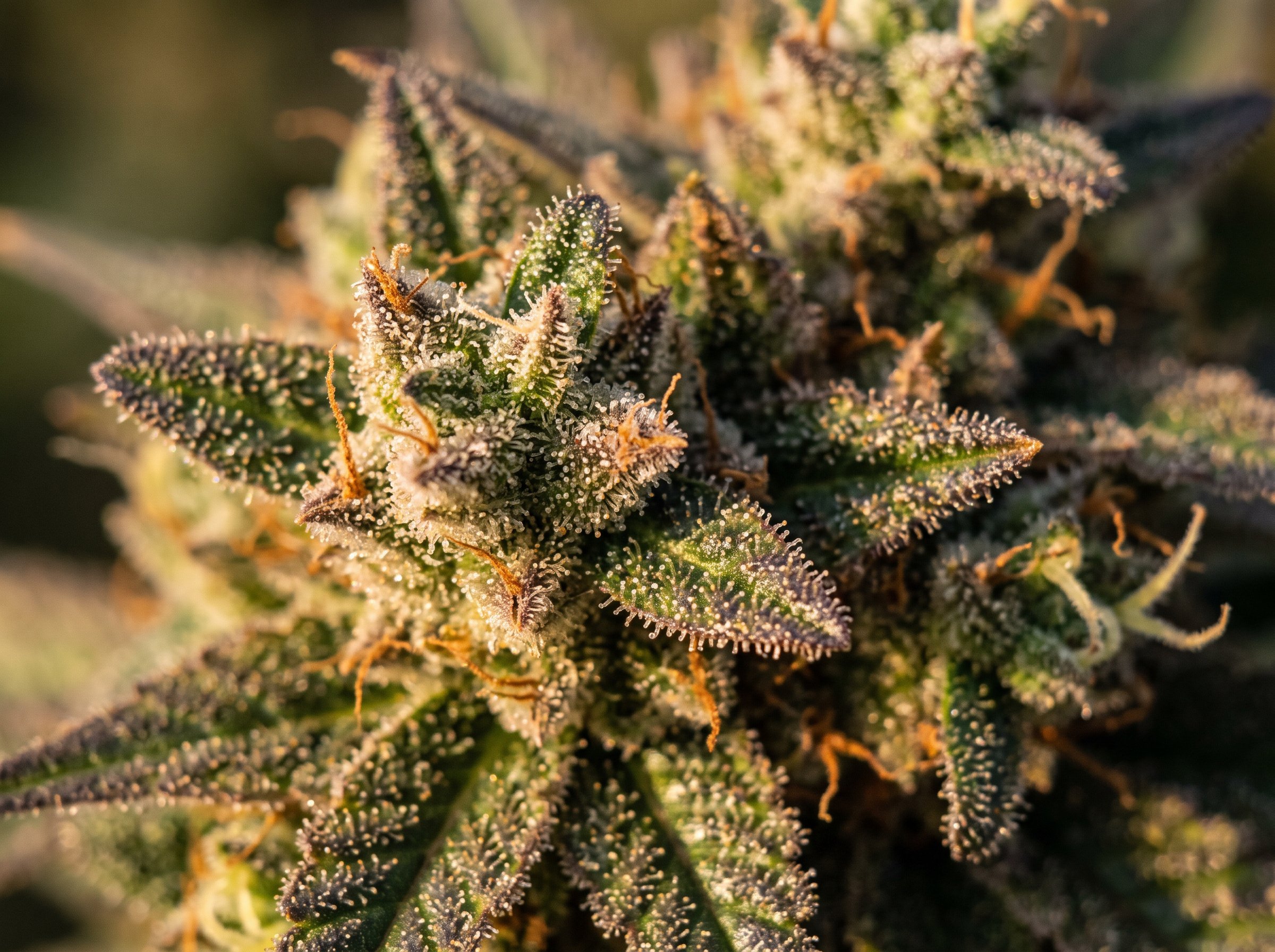
Visually, Sour Diesel buds tend to be long and somewhat fluffy compared to indica-leaning strains, with a pale to medium green color, rust-orange pistils, and a generous frosting of silvery trichomes that reflects its potency.
Sour Diesel Strain Review: Effects and Who It's Best For
Sour Diesel is celebrated for delivering a fast-acting, cerebral rush that many consumers describe as mentally clarifying and mood-elevating[1]. Effects typically onset within minutes of inhalation and can last anywhere from 2 to 3 hours, sometimes longer depending on individual tolerance and consumption method.
Energy and Creativity
The sativa-dominant effects make Sour Diesel a go-to for consumers seeking daytime functionality. Many users report enhanced focus, creative thinking, and a sociable, talkative energy — qualities that have made it a favorite for artists, professionals, and social consumers alike[1].
Potential Side Effects
Due to its high THC concentration (often 20–25%), Sour Diesel is not considered a beginner-friendly strain. Common side effects can include[5]:
- Dry mouth and dry eyes
- Heightened anxiety or racing thoughts, particularly in those sensitive to THC or at high doses
- Mild paranoia, especially in lower-tolerance consumers
- Dizziness with overconsumption
New consumers or those with THC sensitivity are advised to start low and go slow — a guiding principle supported by cannabis health educators and consumer safety organizations[5][6].
Similar Strains to Explore
If you enjoy Sour Diesel, you may also appreciate Super Silver Haze (similarly energizing and terpene-rich), Durban Poison (a pure sativa with sweet-earthy notes), or Green Crack (another high-energy daytime strain with citrus undertones).
Conclusion
Sour Diesel has earned its legendary status for good reason. Its distinctive fuel-and-citrus terpene profile, potent 20–25% THC range, and fast-acting cerebral effects make it one of the most recognizable and consistently satisfying sativa-dominant strains available today[1][3].
It is best suited for experienced consumers looking for an energizing, mood-lifting daytime option. If you're exploring Sour Diesel for the first time, ask your budtender for a lab-tested product with a detailed terpene breakdown — the presence of limonene and caryophyllene alongside myrcene is a good indicator of an authentic, quality expression of this classic cultivar[6].
Ready to explore more strains like Sour D? Browse our full sativa strain guides at The Strain Report.
Sources
- Leafly - Sour Diesel strain profile: consumer effects data, THC ranges, reported experiences, and dispensary availability
2. Weedmaps - Sour Diesel terpene and cannabinoid data compiled from licensed dispensary lab results and consumer reporting
3. NORML - Cannabis strain history, cultivation background, and consumer education resources
4. National Institutes of Health – PubMed - Peer-reviewed research on cannabis terpene pharmacology including myrcene, limonene, and caryophyllene mechanisms
5. National Institute on Drug Abuse (NIDA) - Cannabis effects, THC sensitivity, dose-response relationships, and consumer health information
6. Project CBD - Terpene science, the entourage effect, and evidence-based cannabis consumer guidance