
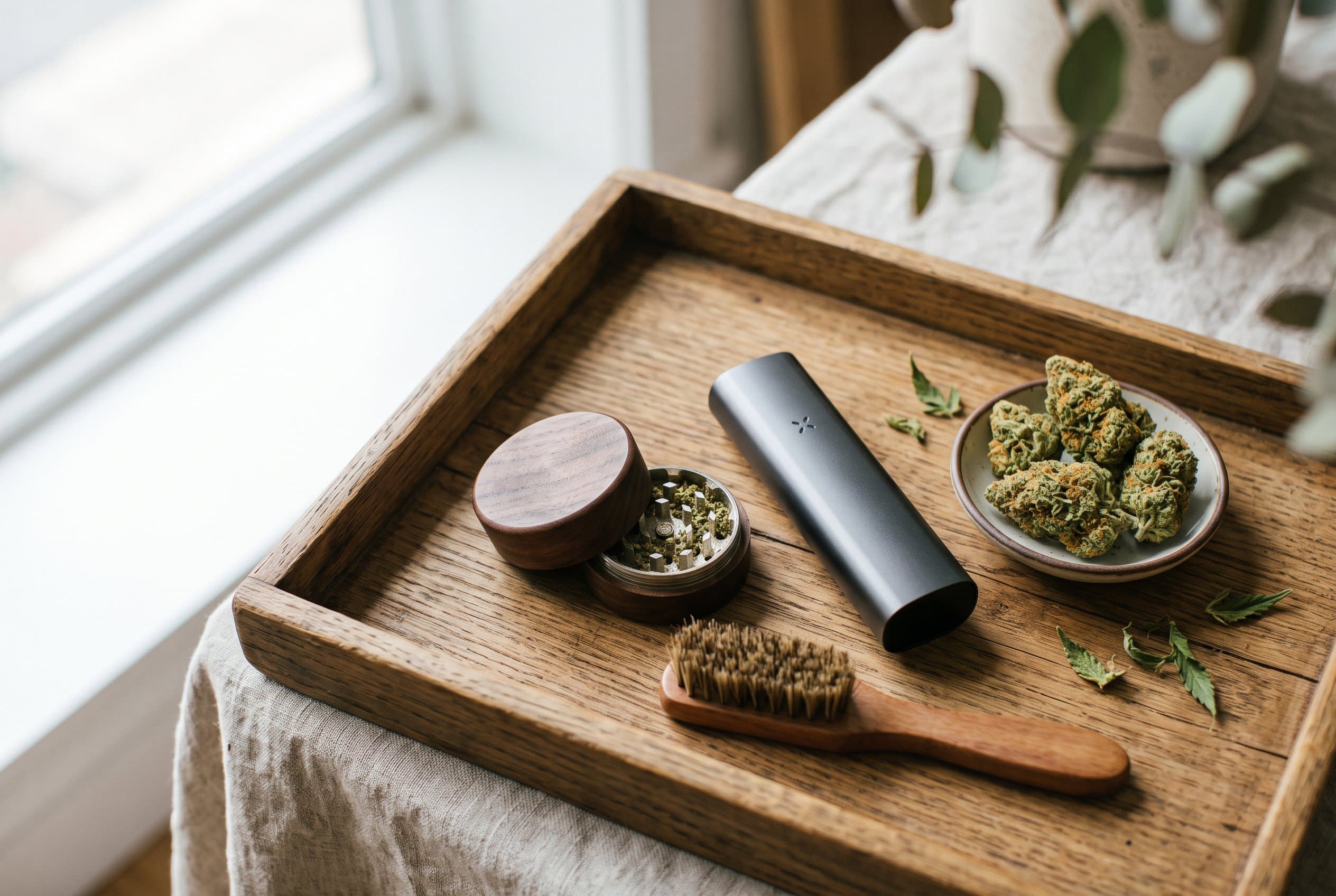
Quick Answer
The best dry herb vaporizer is one that heats cannabis at precise temperatures to preserve terpenes and cannabinoids without combustion, delivering cleaner, more flavorful vapor than smoking. Convection-style vaporizers are generally considered superior for flavor and efficiency, while conduction models tend to be more affordable and portable. The right device depends on your preferred strains, consumption habits, and budget.
Key Takeaways
- Dry herb vaporizers heat cannabis below the combustion point (typically 315–440°F / 157–227°C), preserving terpenes and cannabinoids more effectively than smoking
- Convection heating produces more even, flavorful vapor; conduction heating is faster and more portable
- Temperature control is critical — different terpenes and cannabinoids vaporize at different temperatures
- Vaping flower allows consumers to taste strain-specific terpene profiles that are often lost in combustion
- Device quality, heat-up time, battery life, and ease of cleaning are the top practical factors to evaluate
Introduction
For cannabis consumers who care about strain flavor, effect precision, and a smoother experience, dry herb vaporizers have become the go-to consumption method. Unlike joints or pipes that burn flower at temperatures exceeding 900°F — destroying many of the plant's delicate compounds — vaporizers work by gently heating cannabis to release its active ingredients as vapor rather than smoke[1]. Whether you're drawn to the citrus burst of a Tangie or the earthy pine of an OG Kush, a quality vaporizer can dramatically change how you experience your favorite strains.
What Is a Dry Herb Vaporizer and How Does It Work?
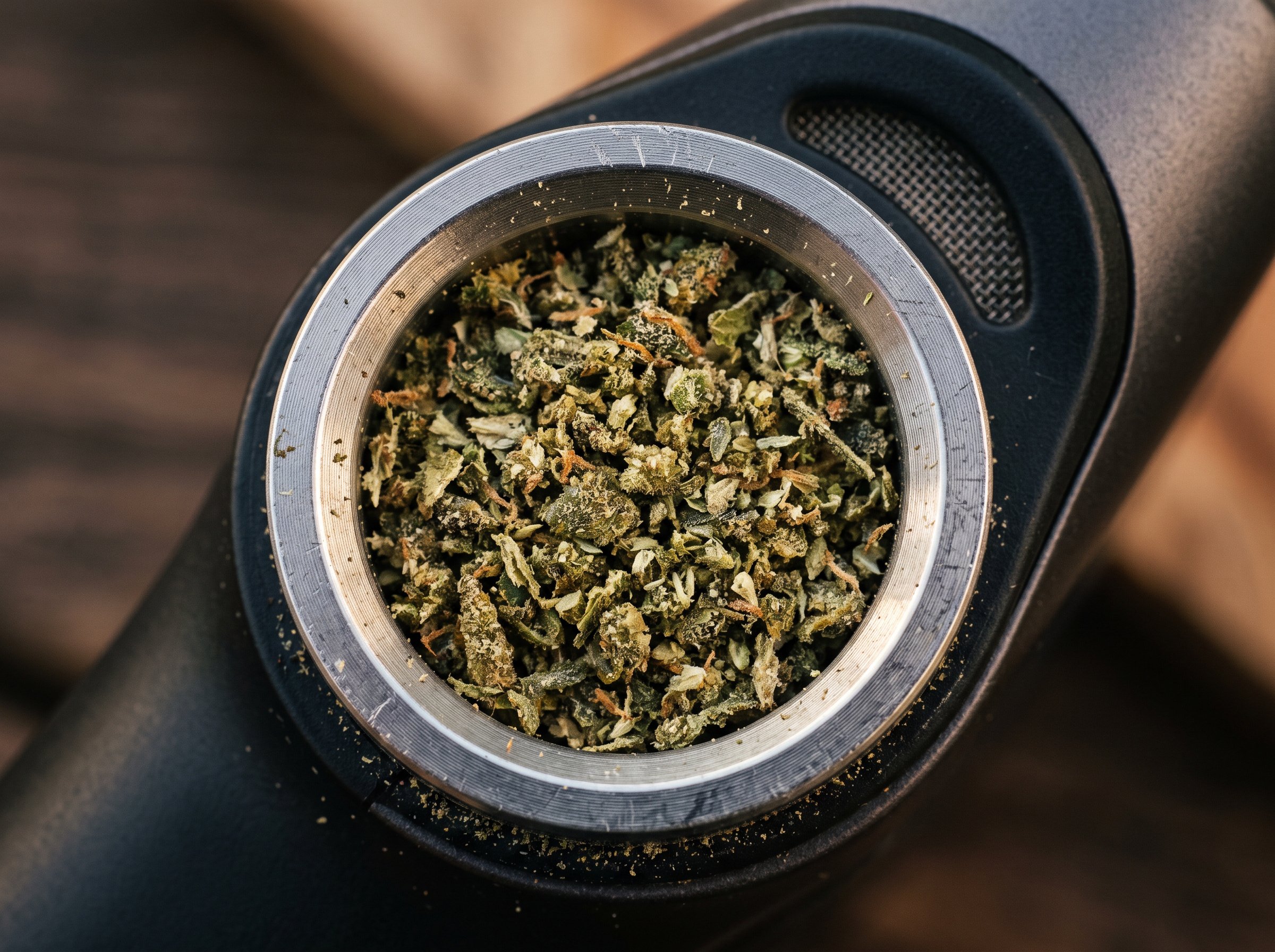
A dry herb vaporizer is a device specifically designed to heat ground cannabis flower to a temperature range that activates cannabinoids and terpenes without igniting the plant material. Most devices operate between 315°F and 440°F (157°C–227°C), a window that sits well below the combustion threshold of approximately 450°F (232°C)[2].
There are two primary heating methods:
Convection Heating
Hot air is passed through the herb chamber, heating flower evenly from the outside in. This method is widely praised for producing the most flavorful, consistent vapor and is generally considered the gold standard for terpene preservation[3]. Convection vaporizers tend to cost more but reward users with a noticeably richer experience.
Conduction Heating
The herb makes direct contact with a heated surface. These devices heat up faster and are typically more compact and affordable, making them popular for on-the-go use. The trade-off is slightly less even heating, which can occasionally lead to hot spots in the chamber.
Many modern premium vaporizers use a hybrid of both systems to balance speed and vapor quality.
Why Does Temperature Matter for Terpenes and Cannabinoids?
This is where dry herb vaping becomes especially interesting for strain enthusiasts. Cannabis contains over 100 different terpenes and multiple cannabinoids, each with its own vaporization point[4]. Dialing in the right temperature lets consumers essentially "tune" their experience.
Here's a practical temperature guide:
- 315–330°F (157–165°C): Light, clear-headed effects; highlights delicate terpenes like terpinolene and ocimene — great for strains like Jack Herer or Durban Poison
- 330–370°F (165–187°C): The sweet spot for most consumers; activates THC efficiently and brings out myrcene, limonene, and linalool — ideal for balanced hybrids like Blue Dream (17–24% THC) or Gelato
- 370–420°F (187–215°C): Fuller body effects and more pronounced CBD activation; terpenes like beta-caryophyllene and humulene shine — well-suited to high-CBD strains or indica-leaning varieties[5]
- 420–440°F (215–227°C): Maximum cannabinoid extraction; heavier, more sedating vapor — best for experienced consumers seeking deep relaxation
For context, myrcene — the most common terpene in commercial cannabis — vaporizes at around 334°F (168°C), while beta-caryophyllene, known for its spicy, peppery aroma, vaporizes closer to 320°F (160°C)[4].
What Features Should You Look for in a Dry Herb Vaporizer?
With dozens of devices on the market, narrowing your options comes down to a few core features:
- Precise temperature control: Look for devices with degree-by-degree adjustment rather than preset modes — this flexibility is essential for exploring different strains and terpene profiles
- Heating method: Convection for flavor-forward sessions; conduction or hybrid for portability and convenience
- Chamber size: Smaller chambers (0.1–0.2g capacity) are efficient for solo sessions; larger chambers suit group use
- Battery life: For portable units, aim for at least 60–90 minutes of continuous use per charge
- Heat-up time: Premium portable vaporizers typically reach target temperature in 20–45 seconds; desktop units may take slightly longer
- Ease of cleaning: Residue buildup affects vapor quality significantly — removable, dishwasher-safe screens and glass pathways simplify maintenance[6]
- Build materials: Food-grade stainless steel, ceramic, or borosilicate glass vapor paths are preferred; avoid devices with plastic in the vapor pathway
Desktop vaporizers like the Storz & Bickel Volcano have maintained a loyal following among home users for decades due to their precision and consistency, while portable units from brands like Arizer, PAX, and DynaVap have expanded accessibility for everyday use[1].
How Does Vaping Flower Compare to Other Consumption Methods?
Research published through the National Institutes of Health has explored vaporization as a harm-reduction alternative to smoking, noting that vaporized cannabis produces significantly fewer combustion byproducts like carbon monoxide and tar[2]. Consumer surveys on platforms like Leafly consistently show that dry herb vaping ranks highly among cannabis users who prioritize flavor and effect clarity[1].
Compared to edibles, vaping offers faster onset (typically 5–15 minutes versus 45–90 minutes for edibles) and more predictable dosing. Compared to concentrates, vaping whole flower preserves the full-spectrum "entourage effect" — the synergistic interaction of cannabinoids, terpenes, and flavonoids working together rather than in isolation[3]. For consumers who want to stay connected to the specific character of a particular strain — whether that's the earthy myrcene of an OG Kush or the bright limonene of a Mimosa — dry herb vaping is arguably the most strain-expressive consumption method available.
Conclusion
Choosing the best dry herb vaporizer ultimately means matching a device's capabilities to how you consume and what strains you love. If flavor and terpene exploration are your priorities, invest in a convection or hybrid device with precise temperature control. If portability and price matter most, a quality conduction vaporizer will still outperform combustion for compound preservation. Start by identifying two or three strains you enjoy most, research their dominant terpenes and their vaporization temperatures, and use that as your temperature baseline when evaluating devices. Your vaporizer should work with the cannabis you love — not against it.
Sources
- Leafly - Cannabis consumer data, strain profiles, and consumption method surveys
2. National Institutes of Health — National Library of Medicine - Research on vaporization as a cannabis consumption method and combustion byproduct comparison
3. Project CBD - Terpene science, cannabinoid interactions, and the entourage effect
4. Frontiers in Pharmacology - Peer-reviewed research on cannabis terpene profiles and vaporization temperatures
5. Journal of Cannabis Research - Peer-reviewed studies on cannabinoid activation and temperature-dependent extraction
6. NORML - Consumer harm-reduction research and cannabis vaporization data