
Quick Answer
This dispensary vs delivery service guide covers everything you need to know about choosing between these two legal cannabis purchasing options. Dispensaries offer hands-on expert advice, a broader in-store experience, and real-time budtender consultation. Delivery services prioritize convenience and discretion. The best option depends on your priorities around access, product knowledge, and personal circumstances[1].
Key Takeaways
- Dispensaries typically offer larger menus, live budtender consultation, and the ability to inspect products in person before buying.
- Delivery services provide unmatched convenience, privacy, and are ideal for medical patients or consumers with mobility challenges.
- Both channels carry regulated, lab-tested products in legal markets — safety is not a differentiating factor between them[2].
- Dispensary menus often change daily; delivery platforms may have slightly different inventory depending on the provider.
- First-time consumers may benefit more from an in-person dispensary visit due to access to budtender guidance[3].
- Delivery is not legal in every state where cannabis is permitted — always verify local regulations before ordering[1].
Introduction
The legal cannabis market has evolved rapidly, and today's consumers have more purchasing options than ever. Whether you walk into a sleek storefront dispensary or tap a few buttons on a delivery app, you're accessing regulated, lab-tested cannabis — but the experience looks very different depending on which route you choose.
This dispensary vs delivery service guide walks you through everything you need to know so you can shop smarter, whether you're a curious beginner exploring your first strain or a seasoned consumer optimizing your routine[3].
What Are the Main Differences Between a Dispensary and a Delivery Service?
At their core, both dispensaries and delivery services operate under state-licensed regulations and sell the same types of cannabis products — flower, edibles, concentrates, tinctures, and more[1]. The key differences lie in how you access those products.
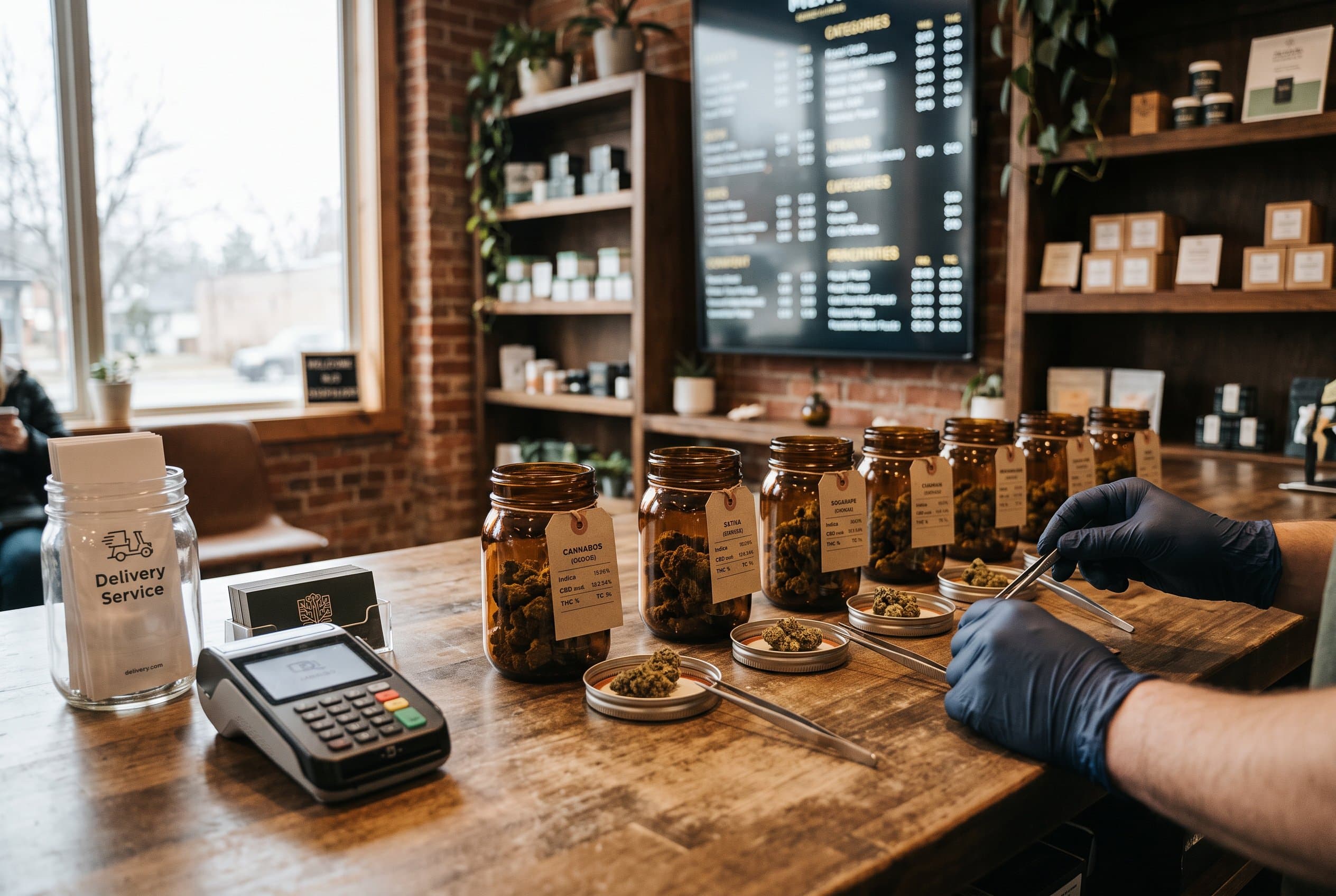
A brick-and-mortar dispensary is a physical retail location staffed by trained budtenders. You can browse products, read lab testing labels, ask questions about terpene profiles, and sometimes even smell flower before purchasing. For consumers who want guidance — say, understanding the difference between a myrcene-forward indica like Granddaddy Purple (typically 17–23% THC) and a limonene-dominant sativa like Super Lemon Haze (18–25% THC) — a dispensary visit allows for real-time, personalized recommendations[4].
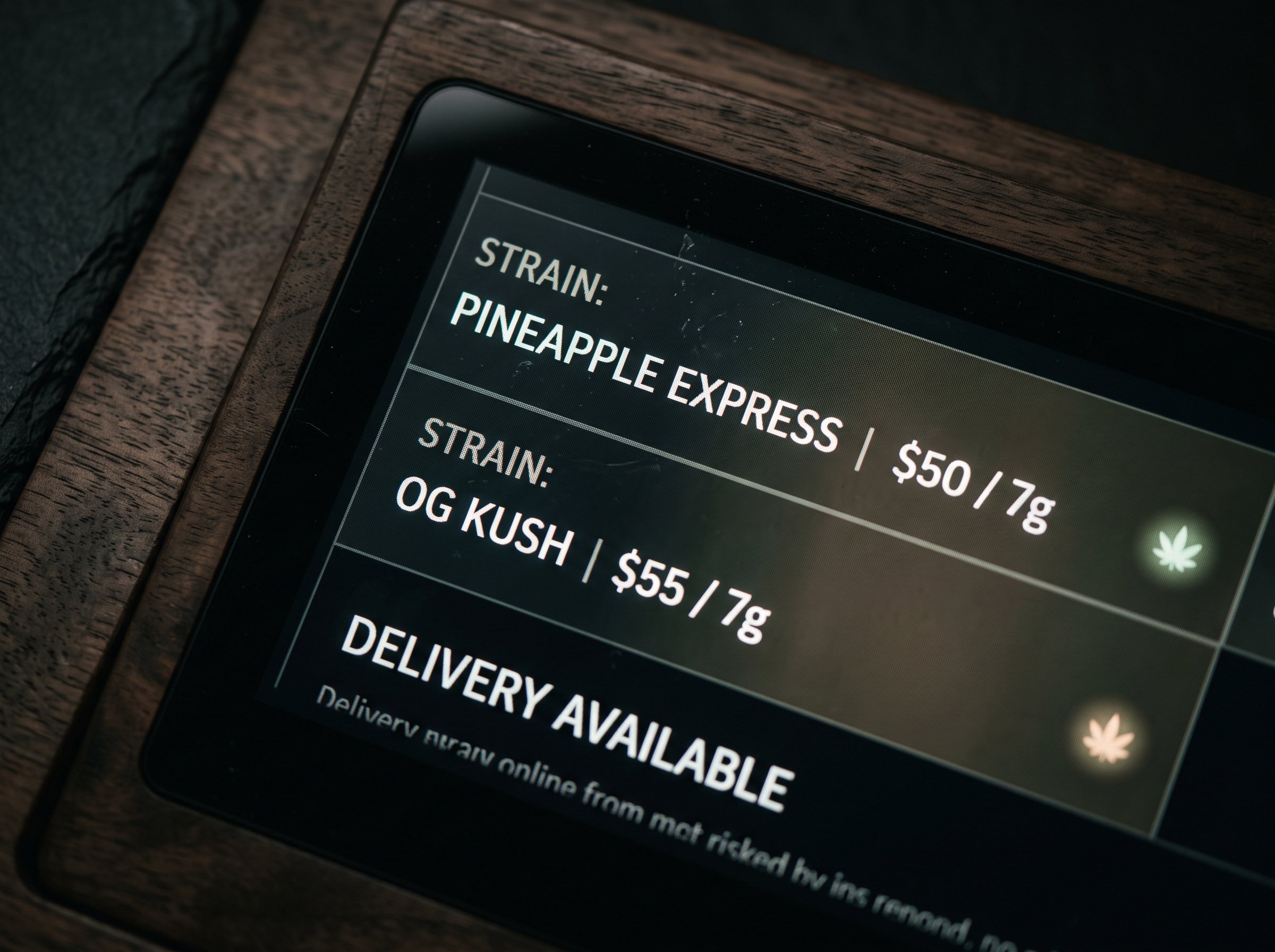
A cannabis delivery service is a licensed platform or retailer that brings products directly to your door. Ordering is done online or via app, and most platforms display the same COA (Certificate of Analysis) lab data you'd find in-store. Delivery is a strong fit for experienced consumers who already know their preferred strains, terpenes, or cannabinoid ratios and don't need in-person consultation[2].
Dispensary vs. Delivery Service: Side-by-Side Comparison
| Feature | Dispensary | Delivery Service |
|---|---|---|
| Convenience | Requires travel | Door-to-door service |
| Product Selection | Typically broader, updated daily | Curated menu, may vary |
| Budtender Guidance | In-person, real-time | Limited (chat or phone) |
| Privacy | Public storefront visit | Discreet home delivery |
| Wait Time | Immediate (with possible queue) | 30 min – several hours |
Dispensary vs Delivery Service Guide: When Does a Dispensary Make More Sense?
If you're new to cannabis, navigating a dispensary is one of the best decisions you can make. Budtenders are trained to walk you through cannabinoid profiles, explain what terpenes like linalool, caryophyllene, and pinene actually do, and help you match a product to your desired experience[3]. That kind of nuanced conversation is hard to replicate in a chat box.
Dispensaries also tend to carry a wider rotating selection of flower strains, limited-run concentrates, and exclusive local brands. If you're chasing a specific cultivar — like a batch of Wedding Cake (20–25% THC, dominant in caryophyllene and limonene) or a high-CBD strain like ACDC (1–6% THC, 14–20% CBD) — being on-site gives you first access to new inventory[4].
Dispensaries are also ideal when you want to verify packaging, read COAs directly, or compare two products side by side before committing[5].
Dispensary vs Delivery Service Guide: When Does Delivery Make More Sense?
Delivery services shine in scenarios where access or privacy is the priority. Medical cannabis patients who experience chronic discomfort or mobility challenges benefit enormously from home delivery options[2]. Similarly, consumers in suburban or rural areas who live far from the nearest dispensary find delivery both practical and time-saving.
For consumers who have already found their go-to products — whether that's a familiar Blue Dream (17–24% THC, myrcene-dominant) vape cartridge or a consistent CBD:THC 1:1 tincture — reordering through a delivery platform is fast and efficient. Many platforms also offer subscription features, loyalty discounts, and first-time delivery promotions[6].
One important note: delivery windows can range from 30 minutes to several hours depending on your location and the service. If you need something same-day, always check estimated times before placing your order[1].
Is Cannabis Delivery Legal and Safe?
In legal cannabis states, licensed delivery services are required to follow the same regulatory frameworks as physical dispensaries — including age verification, purchase limits, and lab-tested product requirements[5]. Delivery drivers carry manifests and follow strict chain-of-custody protocols.
However, delivery is not legal in every state where cannabis is legal. Some states permit medical delivery only, while others restrict delivery entirely. Always verify your state's current laws before using a delivery service[1].
Online cannabis directories include delivery availability filters by location, making it easy to confirm what's permitted in your area[6].
Conclusion
Neither dispensaries nor delivery services are universally "better" — they serve different consumer needs equally well. If you're just starting your cannabis journey or want expert guidance on terpenes and strain selection, visit a dispensary and talk to a budtender. If you're an experienced consumer who values convenience and already knows what works for you, delivery is a seamless and fully regulated option[3].
The smartest approach? Use both. Visit a dispensary to discover new strains and products, then reorder your favorites via delivery when you're ready to streamline[5].
Sources
- NORML - State cannabis laws, consumer rights, legal market regulatory frameworks, and delivery compliance standards by state
2. National Institutes of Health - Cannabis access research including medical patient use patterns, mobility considerations, and delivery policy analysis
3. Cannabis Regulatory Association (CANNRA) - Cannabis retail compliance standards, budtender training requirements, COA interpretation, and state-by-state regulatory reporting
4. Project CBD - Terpene and cannabinoid science education for consumers, including strain-specific cannabinoid profile data and retailer consultation best practices
5. University of California Agriculture and Natural Resources - Cannabis retail safety, lab testing standards, Certificate of Analysis guidance, and consumer protection research
6. Colorado State University Extension - Cannabis consumer education resources, legal purchasing guidelines, and regulated market access information