
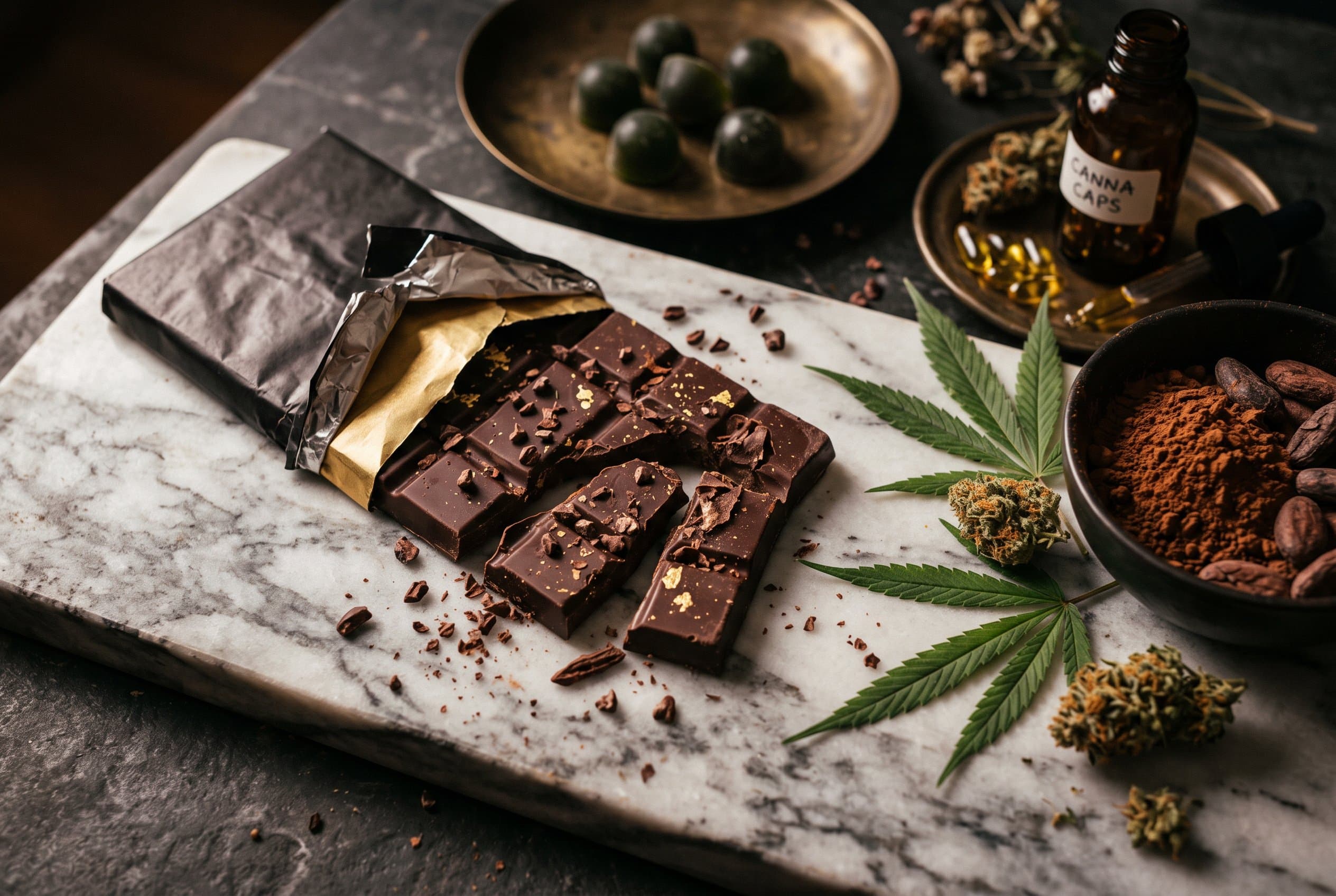
Quick Answer
The cannabis gummies vs capsules comparison comes down to a few key differences: onset time, dosing precision, ingredient profiles, and taste. Gummies tend to onset slightly faster due to partial oral absorption, while capsules offer more precise, flavorless dosing. Your best choice depends on whether you prioritize convenience, flavor, or consistency.
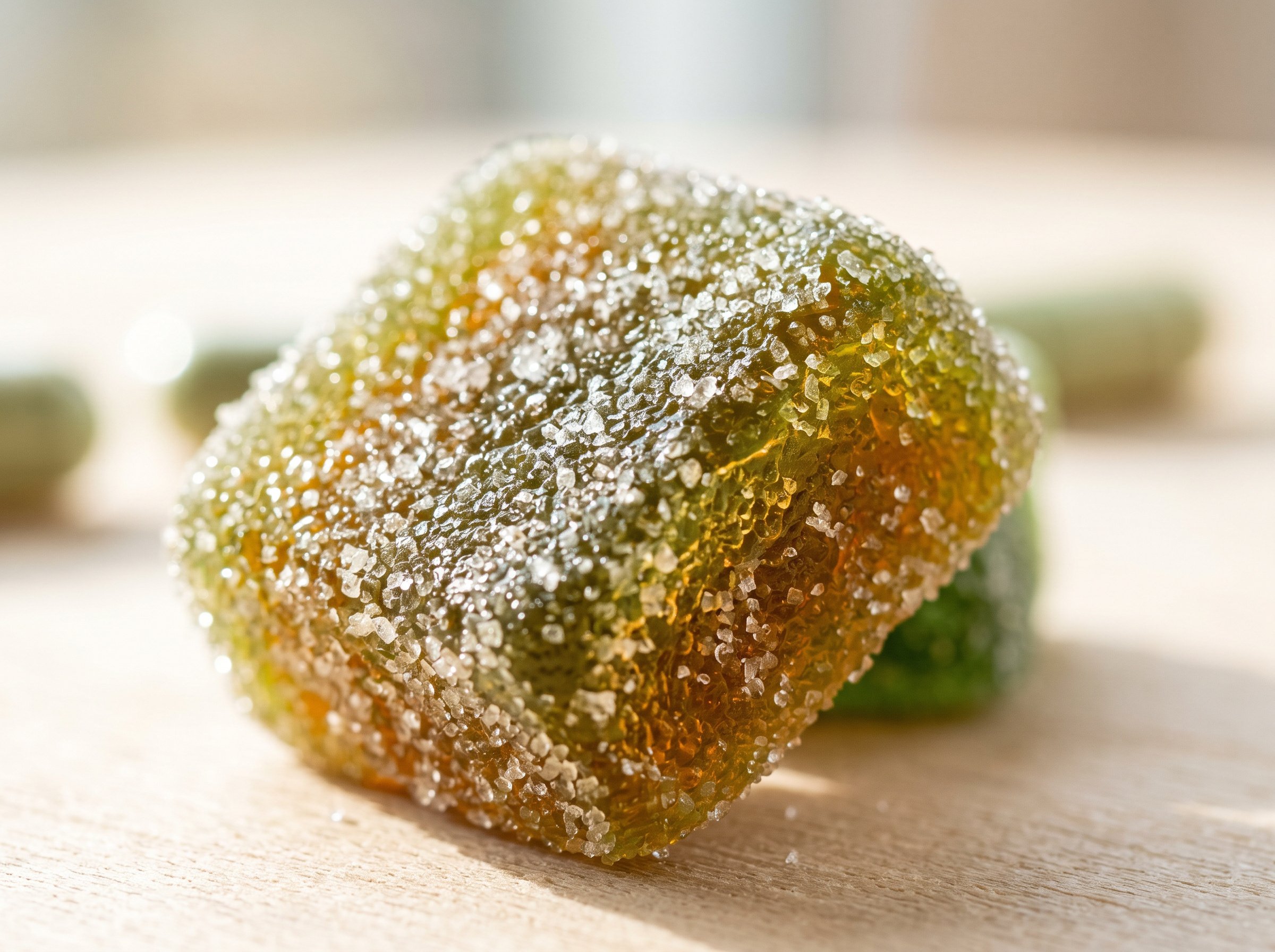
Key Takeaways
- Gummies typically begin working in 30–90 minutes; capsules may take 45–120 minutes depending on formulation
- Capsules often contain more precisely measured doses, making them easier to titrate
- Both formats are processed through the liver, converting THC to the more potent 11-hydroxy-THC
- Gummies may contain added sugars or artificial ingredients; capsules are generally cleaner for ingredient-conscious consumers
- Nano-emulsified versions of both formats can dramatically reduce onset times to as little as 15–30 minutes
Introduction
The edibles market has exploded in variety, but two formats remain the most popular for consistent, controlled cannabis experiences: gummies and capsules. Whether you're a first-time cannabis consumer or a seasoned user refining your routine, understanding the real differences between these formats goes beyond taste preference. From bioavailability to ingredient transparency, each format has distinct advantages — and knowing them helps you make a smarter, more satisfying choice.
Cannabis Gummies vs Capsules: What's the Core Difference?
At their core, both gummies and capsules are oral cannabis products designed to deliver cannabinoids — most commonly THC, CBD, or a combination of both — into the bloodstream through digestion[1]. But how they get there matters.
Gummies are chewed and swallowed, meaning a small portion of cannabinoids may begin absorbing sublingually through the mucous membranes of the mouth before the rest travels to the stomach[2]. This can give gummies a slightly faster perceived onset compared to capsules, often reported between 30 and 90 minutes.
Capsules — whether gelatin or vegan-friendly cellulose shells — bypass any oral absorption and dissolve entirely in the digestive tract. Depending on whether they're oil-based softgels or powder-filled hard caps, onset typically ranges from 45 to 120 minutes[3]. Softgel capsules with lipid carriers tend to absorb more efficiently than dry powder formulations.
Both formats convert delta-9-THC into 11-hydroxy-THC in the liver, a metabolite known to be more potent and longer-lasting than inhaled THC — which is why edible experiences often feel more intense and can last 4 to 8 hours[4].
Cannabis Gummies vs Capsules: Dosing and Bioavailability Compared
Gummies vs. Capsules: Key Comparison
| Attribute | Gummies | Capsules |
|---|---|---|
| Typical onset | 30–90 minutes | 45–120 minutes |
| Dose precision | Moderate (5–10 mg standard) | High (measured to the mg) |
| Bioavailability | 4–20% (standard); higher with nano | 6–19% (softgels absorb better) |
| Flavor | Sweet, fruity, or sour | Flavorless |
| Added ingredients | Often contain sugar, pectin, artificial colors | Minimal; oil or powder base only |
| Discretion | Moderate | High |
Bioavailability — the percentage of a dose that actually reaches your bloodstream — is notoriously low for all oral cannabis products[5]. Standard formulations of both gummies and capsules hover between 4–20%, though nano-emulsified or liposomal products are engineered to improve absorption significantly, sometimes reaching onset within 15–30 minutes[3].
For dose-sensitive consumers, capsules often win on precision. A capsule labeled 10 mg THC contains exactly that in a sealed unit. Gummies can vary slightly batch-to-batch, though reputable brands with third-party lab testing (COAs) minimize this variance[6].
Which Format Is Better for Specific Consumer Needs?
Neither format is universally superior — context drives the best choice.
Choose gummies if you:
- Enjoy a pleasant flavor experience with your dose
- Want a more social or approachable format
- Are a newer consumer who benefits from the slower, mindful act of chewing and waiting
- Prefer a wide range of potency options (many brands offer 2.5 mg microdose gummies up to 25 mg per piece)
Choose capsules if you:
- Prefer a pharmaceutical-style dosing experience with no taste
- Avoid added sugars, artificial dyes, or pectin
- Need consistent, repeatable results — especially important for CBD-focused wellness routines
- Want a format that's completely discreet and odorless in any setting
Cannabis patients using CBD-rich products — such as formulations with a 1:1 THC:CBD ratio or high-CBD isolate like 25 mg CBD per capsule — often gravitate toward capsules for their clean ingredient profiles and reliable absorption[2].
What Should You Look for on the Label?
Regardless of format, label literacy is essential. Look for:
- Total cannabinoid content: THC and CBD listed in milligrams per serving, not just percentages
- Certificate of Analysis (COA): Third-party lab testing verifying potency and screening for contaminants[6]
- Full-spectrum vs. broad-spectrum vs. isolate: Full-spectrum products retain minor cannabinoids and terpenes like myrcene, linalool, and beta-caryophyllene, which may contribute to an entourage effect[1]; isolates contain only the target cannabinoid
- Nano-emulsification: If faster onset is important, look for this on the label
- Serving size clarity: Some packages list cannabinoids per package rather than per piece — always check per-serving numbers[5]
Conclusion
Cannabis gummies and capsules are both excellent oral delivery formats — the right one simply depends on your priorities. If you value flavor, variety, and an approachable format, gummies are a great starting point. If you want clean ingredients, precise dosing, and maximum discretion, capsules are hard to beat. Either way, start low (2.5–5 mg THC for new consumers), go slow, and always buy from brands with verified third-party lab results. Exploring both formats is the best way to discover what fits your lifestyle[4].
Sources
- University of California Agriculture and Natural Resources - Research on cannabis plant compounds, terpenes, and consumer product formulations
2. Colorado State University Extension - Cannabis consumer education, bioavailability, and oral delivery formats
3. Frontiers in Pharmacology - Peer-reviewed research on cannabis oral bioavailability and nano-emulsified delivery systems
4. NCBI / PubMed - Peer-reviewed studies on 11-hydroxy-THC metabolism, edible cannabis pharmacokinetics, and dosing effects
5. National Institutes of Health (NIH) - Clinical research on pharmacokinetics of oral cannabinoid administration and absorption variability
6. U.S. Cannabis Council - Industry standards for cannabis product labeling, third-party testing, and Certificate of Analysis requirements