
Quick Answer
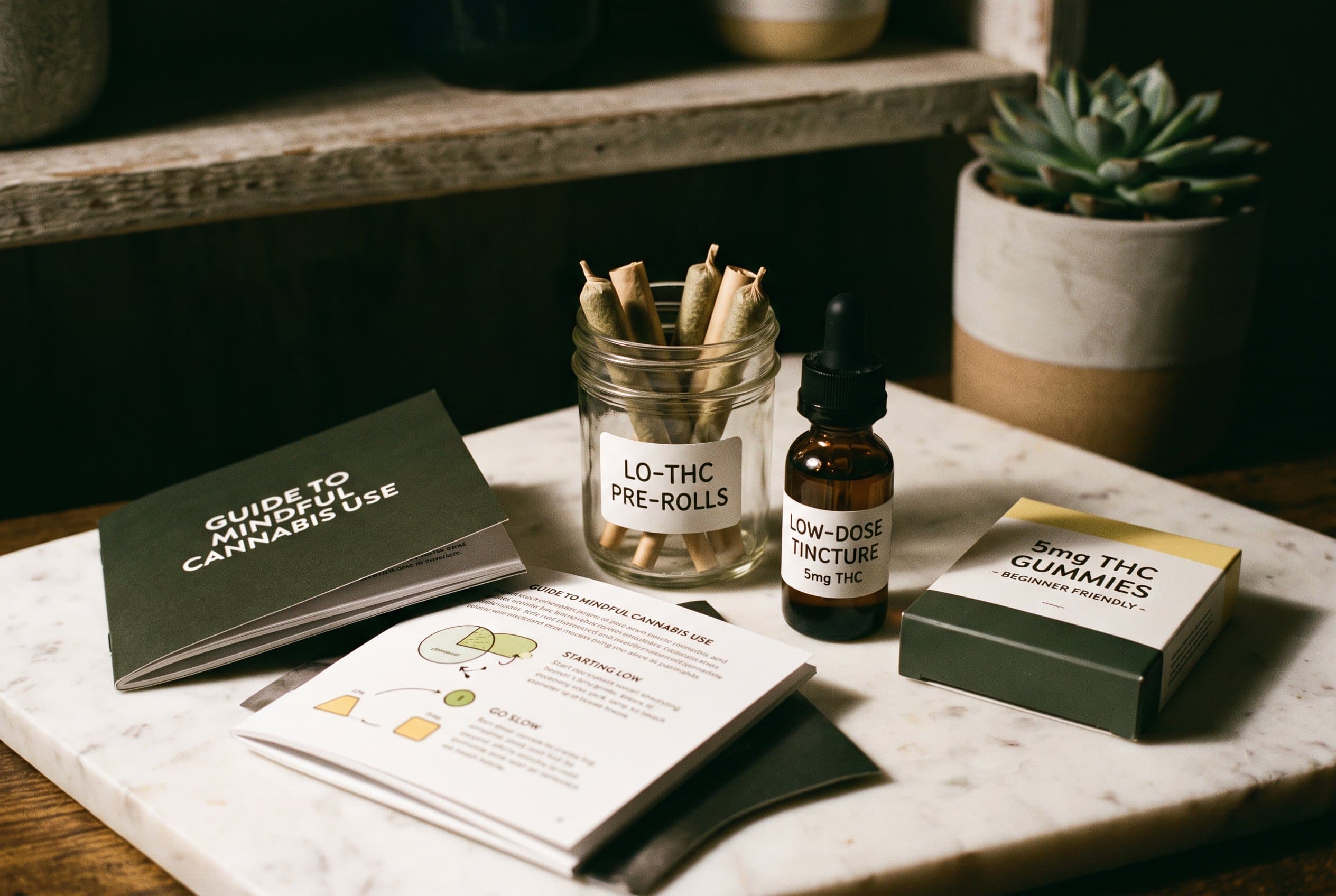
The best beginner-friendly low-THC strains are those testing under 15% THC — often with elevated CBD or balanced cannabinoid ratios — that deliver gentle, manageable effects without overwhelming new consumers. Top picks include Harlequin, ACDC, Cannatonic, Blue Dream (in lower-testing phenotypes), and Pennywise, all known for smooth onset and forgiving experiences.
Key Takeaways
- Low-THC strains (under 15% THC) are widely recommended as starting points for cannabis beginners
- CBD-rich or balanced THC:CBD strains can help moderate psychoactive intensity
- Terpenes like myrcene, linalool, and beta-caryophyllene contribute to calming, body-forward effects
- Strain lineage and cannabinoid ratios matter more than indica/sativa labels for predicting beginner experience
- Start with a low dose regardless of strain — effects vary by individual tolerance and consumption method
Introduction
Walking into a dispensary for the first time can feel like reading a menu in a foreign language. Percentages, ratios, terpene names — it's a lot. For new cannabis consumers, choosing among the best beginner-friendly low-THC strains is the single most impactful decision you can make before your first session[1]. High-THC flower — often 25–30%+ in today's market — can trigger anxiety, racing thoughts, or disorientation in those without established tolerance[4]. Low-THC strains sidestep much of that risk, offering a gentler on-ramp to cannabis without sacrificing a meaningful experience.
Why THC Percentage Matters for Beginner-Friendly Low-THC Strains
THC (delta-9-tetrahydrocannabinol) is the primary psychoactive compound in cannabis. When someone says they felt "too high" or anxious after using cannabis, excess THC is almost always the culprit[4]. The average THC content of cannabis sold in U.S. dispensaries has climbed significantly over the past two decades, with many top-shelf flowers now regularly testing above 25%[5].
For a first-time consumer whose endocannabinoid system has no established tolerance, that's an enormous dose. Low-THC strains — generally defined as those testing between 6% and 15% THC — produce a noticeably milder psychoactive effect[3]. Many beginners report feeling relaxed, lightly euphoric, and clear-headed rather than intensely intoxicated. Strains with elevated CBD content (5% or higher) are particularly forgiving, as CBD appears to modulate THC's psychoactive intensity[2].
Best Beginner-Friendly Low-THC Strains to Try First
Harlequin (CBD:THC ~5:2)
Harlequin is one of the most recommended strains for beginners and CBD-curious consumers. A sativa-dominant hybrid descending from Colombian Gold, Thai, and Swiss Sativa genetics, it typically tests at 6–10% THC and 10–15% CBD[1]. Its dominant terpenes — myrcene, pinene, and caryophyllene — contribute to a clear-headed, gently uplifting effect that most beginners find easy to manage. Users commonly describe alert relaxation without sedation.
ACDC (CBD:THC ~20:1)
An exceptional phenotype of Cannatonic, ACDC routinely tests at just 1–6% THC with CBD levels reaching 15–20%[1]. This near-non-psychoactive profile makes it an ideal starting point for those who want the cannabis experience with virtually no intoxication. Dominant terpenes include myrcene and pinene. ACDC is particularly popular among consumers who are sensitive to THC or who want daytime functionality without impairment[2].
Cannatonic (1:1 THC:CBD Ratio)
Cannatonic — a cross of MK Ultra and G13 Haze — typically lands between 6–12% THC and 5–12% CBD, often achieving a near 1:1 ratio[3]. That balanced ratio is meaningful: research suggests CBD and THC interact at cannabinoid receptors in ways that soften the psychoactive edge of THC[2]. Myrcene and caryophyllene dominate its terpene profile, producing relaxed, body-focused effects without heavy sedation.
Pennywise (1:1 THC:CBD)
A cross between Harlequin and Jack the Ripper, Pennywise tests at approximately 8–15% THC with a comparable CBD percentage. Its terpene profile — led by caryophyllene, myrcene, and linalool — skews notably calming[1]. Linalool in particular, also found in lavender, is associated with relaxation and is among the most studied cannabis terpenes for its soothing sensory profile[6].
Blue Dream (Lower-Testing Phenotypes, ~14–17% THC)
Blue Dream (Blueberry × Haze) is one of the most consumed strains in the U.S. and frequently appears in beginner-friendly lists[5]. While some phenotypes test higher, dispensary batches in the 14–17% THC range offer a beginner-accessible experience: gentle cerebral lift, mild body relaxation, and a sweet terpene profile led by myrcene and caryophyllene. It's a useful bridge strain for those ready to step up slightly from CBD-dominant options.
What Terpenes Should Beginners Look For in Low-THC Strains?
Terpenes are aromatic compounds that shape how a cannabis strain feels beyond just THC and CBD content[6]. For beginners seeking calm, manageable experiences, these terpenes are worth prioritizing:
- Myrcene — The most common cannabis terpene; associated with relaxation and body-forward effects
- Linalool — Also found in lavender; linked to calming, soothing sensory experiences[6]
- Beta-Caryophyllene — A dietary terpene that also interacts with CB2 receptors; associated with tension relief without psychoactivity[2]
- Alpha-Pinene — Associated with alertness and mental clarity; may help counteract short-term memory effects of THC[4]
When browsing at a dispensary, ask your budtender for the terpene lab report (Certificate of Analysis) alongside the THC/CBD percentages. The full cannabinoid-terpene picture gives you far more predictive power than THC alone[3].
How to Use These Strains Responsibly
Even with low-THC strains, individual responses vary based on body chemistry, consumption method, and prior experience. Inhalation delivers effects within minutes, while edibles can take 60–90 minutes — making flower or a low-dose vape a better choice for beginners who want control[4]. Start with one or two small puffs, wait at least 15 minutes, and assess before consuming more.
Consumption method matters as much as strain choice. A low-THC flower smoked in a large bong hit can still overwhelm a first-time user. Pair your strain choice with a measured, intentional dosing approach for the best outcome[2].
Conclusion
For anyone new to cannabis, starting low and going slow isn't just good advice — it's the difference between a positive first experience and one that puts you off cannabis entirely. The best beginner-friendly low-THC strains, including Harlequin, ACDC, Cannatonic, and Pennywise, offer accessible entry points with forgiving cannabinoid profiles and well-studied terpene compositions[1]. As you build familiarity with how cannabis affects your body, you can confidently explore higher-THC options. Use The Strain Report's strain profiles to compare cannabinoid data before your next dispensary visit — knowledge is the best pre-roll you can bring with you.
Sources
- Leafly - Cannabis strain database and consumer effects data, including Harlequin, ACDC, Cannatonic, and Pennywise strain profiles
2. Project CBD - Cannabinoid science research including CBD-THC interaction studies and terpene pharmacology
3. Journal of Cannabis Research - Peer-reviewed research on cannabinoid ratios, strain effects, and consumer outcomes
4. National Institutes of Health / NCBI - Clinical research on THC psychoactivity, adverse effects, and cannabis pharmacology in new users
5. Cannabis Business Times - Industry market data on average THC potency trends in U.S. licensed dispensaries
6. Frontiers in Pharmacology - Peer-reviewed terpene research including linalool, beta-caryophyllene, and myrcene studies